


AI has quickly become part of how many organizations operate, helping teams make smarter decisions and streamline everyday tasks. But as adoption rates climb, so does security risk. Understanding what AI can do to improve workflow is only half of this equation. The real challenge is making sure it’s protected.
In this article, we’ll break down what those AI security risks look like and what it takes to protect the technology powering your business.
Artificial Intelligence Security and Risks Identification
AI security focuses on protecting the systems that power your models, like the data and applications, from threats that could expose them. As more organizations weave AI into daily work, these systems carry more weight. AI learns from information, stores that knowledge, and connects it across the business. This means that even a small weak spot can quickly create bigger problems.
Security risks emerge when attackers try to manipulate models, steal sensitive training data, or disrupt decisions. Some threats resemble familiar security issues, just applied to new technology. Others stem from how AI functions—like tampering with model behavior or poisoning the data it relies on. When teams can identify these risks clearly, they stay ahead of them instead of scrambling after something goes wrong.
What Are the Security Risks of Artificial Intelligence?
AI security concerns cover a wide range of threats, and understanding them is the first step to staying protected. Here are the top seven risks every company should watch for.
1. Adversarial Threats
Attackers give AI specially designed inputs that fool models into making wrong predictions or decisions. Small changes to data, sometimes even invisible to humans, can completely confuse an AI system.
2. Data Breaches and Poisoning
Hackers can steal sensitive training data and inject false information into it. When AI learns from corrupted or exposed information, it produces unreliable results and can expose confidential information.
3. Backdoor Attacks
Cybercriminals can slip hidden instructions into a model during training. This lets them alter its outputs later, often without anyone noticing until something goes wrong.
4. Model Theft and Intellectual Property Loss
AI models are key intellectual property. Attackers can copy or reverse engineer models, exposing algorithms and strategies that give companies a competitive edge.
5. Misuse of AI Capabilities
Aside from hacking, people can misuse AI tools both internally and externally. For instance, they can generate deepfakes, automate phishing campaigns, and make decisions that violate compliance rules.
6. Unintended Bias and Discrimination
AI can accidentally increase biases in its training data, creating outputs that favor certain groups over others. If teams don’t catch these biases, the consequences can lead to legal, reputational, and operational headaches.
7. Systemic Vulnerabilities
AI doesn’t operate in isolation. Weaknesses in connected systems, including APIs, cloud infrastructure, and integrated applications, can spread across AI systems. This gives attackers indirect access to critical processes.
3 Best Practices to Mitigate AI Security Risks
Keeping AI secure takes more than a checklist. It’s about building habits, systems, and awareness that protect your models every step of the way. Here are three ways teams can stay ahead of threats.
1. Use AI-Driven Security Solutions
While AI can introduce risks, it can also help prevent them. AI-driven security tools can detect unusual activity, flag suspicious inputs, and respond faster than manual monitoring alone. Using AI to protect AI helps teams spot threats early and respond before issues get out of hand.
2. Build a Solid Data Governance Framework
Good AI starts with good data, so establish rules for collecting, storing, and labeling it. Make sure only trusted sources feed your models. When data flows are clean and controlled, you reduce the chances of breaches, poisoning, and bias slipping in.
3. Do Continuous Monitoring
AI isn’t “set and forget it.” You should track model performance, outputs, and behavior over time to catch anomalies ahead of time. Continuous monitoring lets teams identify potential attacks and errors before they escalate, keeping AI reliable and secure.
4 Benefits of AI in Cybersecurity
AI can create cybersecurity challenges if teams don’t manage the technology carefully. But used the right way, it gives security teams powerful tools to spot and stop threats before they escalate. Here are four key benefits to know.
1. Enhances Threat Detection
AI can scan huge volumes of data and spot unusual patterns that the human eye might miss. For instance, it can notice odd logins from different accounts and tiny glitches in network traffic that could signal trouble. This helps teams catch threats faster and respond before they become bigger problems.
2. Automates Incident Response
When attacks happen, speed matters. AI can automatically trigger alerts, isolate affected systems, and even take predefined actions to contain threats. In turn, security teams stay ahead of the breaches.
3. Improves Vulnerability Management
AI analyzes which vulnerabilities attackers are most likely to exploit. This way, teams can prioritize risks and fix the right issues first instead of spreading resources across low-risk problems.
4. Reduces Human Error
Security teams deal with constant, complex data. AI assists by handling repetitive tasks and flagging inconsistencies, reducing the chances that something critical slips through the cracks.
Address AI Security Risks with Legit Security
AI opens up incredible opportunities, but it also comes with serious security risks, like misuse and breaches. AI-powered security tools spot threats, alert teams, and neutralize issues before they escalate.
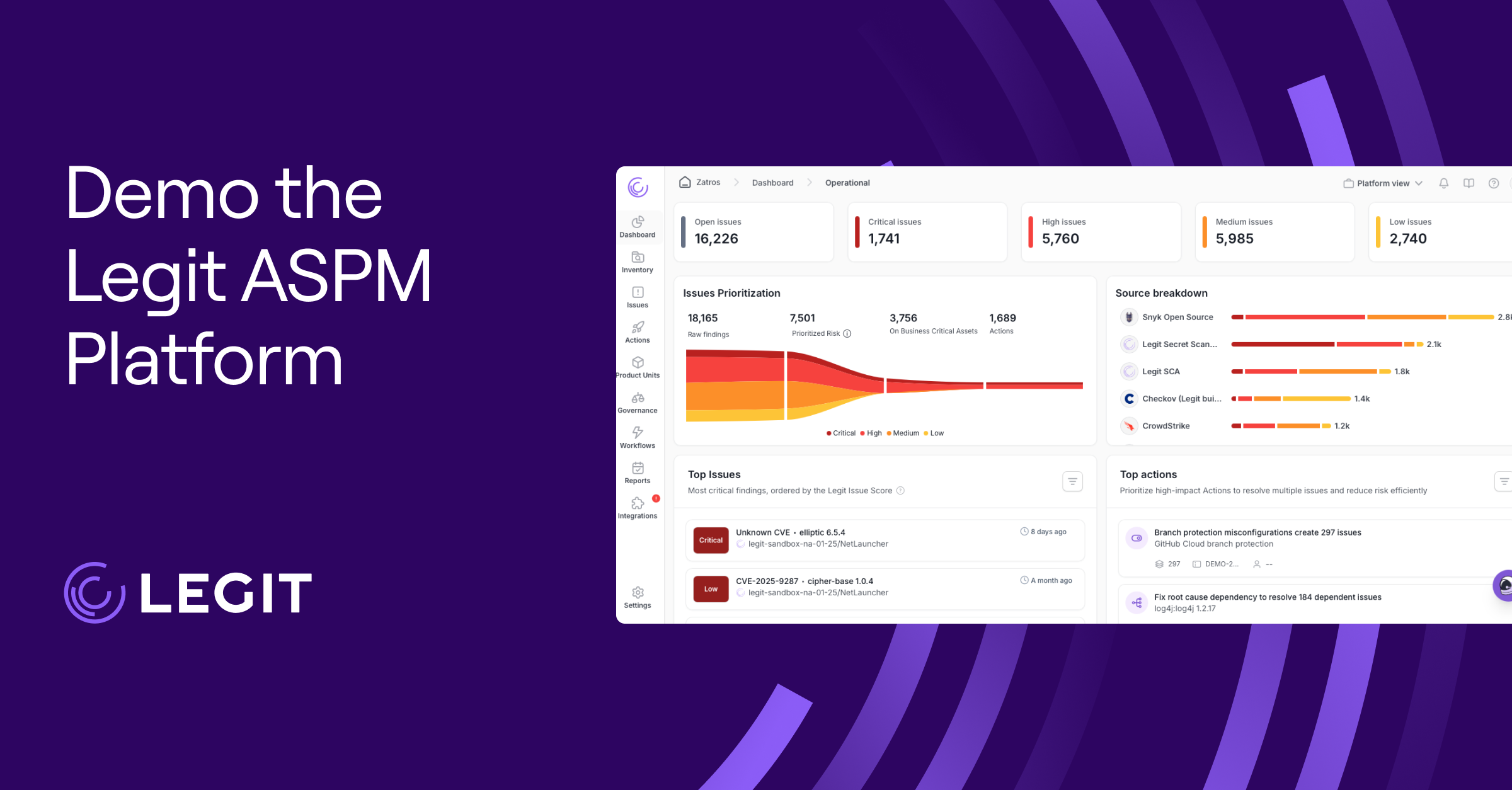
Legit Security takes this further, helping organizations tackle these challenges head-on with an AI-native Application Security Posture Management (ASPM) platform. By integrating security into modern software development workflows, teams gain full visibility into their applications and AI systems—all from a single platform.
Download our new whitepaper.